Description
Measurement of Viscosity and Contact Angle of Precursors
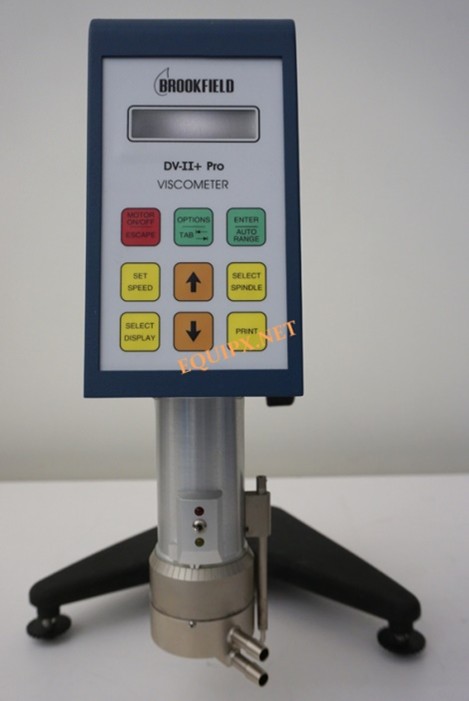
The viscosity of various liquid precursors was measured at room temperature using a Brookfield LV model viscometer, which is equipped with a cone-plate geometry. This type of viscometer is particularly suitable for low- to medium-viscosity fluids and provides accurate, reproducible results under controlled shear conditions.
The cone-plate viscometer operates by rotating a shallow-angle cone over a flat plate, with the test fluid occupying the narrow gap between the two surfaces. As the cone rotates at a predetermined angular velocity, it experiences resistance (torque) due to the viscous nature of the fluid. The instrument measures this torque, which is directly proportional to the fluid’s viscosity under the given conditions. The advantage of the cone-plate system is its ability to apply a uniform shear rate across the fluid sample, making it ideal for characterizing Newtonian and non-Newtonian fluids.
Care was taken to ensure that temperature variations were minimized during measurement, as viscosity is highly sensitive to thermal fluctuations. Room temperature was maintained consistently throughout the measurements, and samples were allowed to equilibrate prior to testing. The viscometer’s rotational speed and spindle type (or cone number) were selected based on the expected viscosity range of each precursor to ensure optimal sensitivity and accuracy.
In addition to viscosity, the contact angle of each precursor was measured to evaluate the wettability and surface interaction characteristics of the fluid with various substrates. Contact angle measurements were conducted using a goniometer. A droplet of the precursor was carefully deposited on a clean, flat substrate, and the angle formed at the interface between the liquid and solid surface was measured using optical analysis. This parameter is critical for understanding spreading behavior, surface tension, and interfacial adhesion — all of which are important in processes such as coating, printing, and thin-film fabrication.
Together, viscosity and contact angle data provide comprehensive insight into the rheological and interfacial properties of the precursors. These properties are essential in optimizing formulation and process parameters for various applications, including material synthesis, biomedical engineering, inkjet printing, and microfluidics.