
Our Team

Dr. Taha M. Rahsid
CEO of Phi
Dr. Taha Mohsin Al-Rashid is a leading Iraqi nanotechnology researcher and entrepreneur, currently serving as CEO of the Phi NanoScience Center in Baghdad. He holds a Ph.D. in Nanotechnology from the University of Technology, Iraq, and is an alumnus of Al-Mustansiriya University. His work focuses on the synthesis and application of nanostructured materials for use in environmental remediation, energy systems, and biomedical technologies. Dr. Al-Rashid has authored numerous peer-reviewed publications, including studies on Au/ZnO core-shell nanoparticles for photocatalysis, green synthesis of iron oxide nanoparticles using plant extracts for dye degradation, and laser ablation methods for producing functional nanocomposites. Through his leadership at PNSC and collaborations with Nawah Scientific and academic institutions, he continues to advance applied nanotechnology research in Iraq.

Prof. Dr. Majid Sakhi Jabir
Scientific Consultation for Immunology-Uk
Prof. Dr. Majid Sakhi Jabir is a prominent Iraqi academic and researcher specializing in immunology, microbiology, and nanobiotechnology. He serves as a professor in the Department of Applied Sciences at the University of Technology in Baghdad, Iraq .
Dr. Jabir earned his Ph.D. in Immunology and Infection from the University of Glasgow, UK . His doctoral research focused on the interactions between inflammasome activation and autophagy, laying the groundwork for his subsequent investigations into cellular immune responses and nanomedicine .
Research Interests
Dr. Jabir's interdisciplinary research encompasses:
• Nanomedicine: Developing nanomaterials for targeted drug delivery and cancer therapy.
• Immunology: Exploring the interplay between autophagy and inflammasome activation.
• Biotechnology: Utilizing nanotechnology in biomedical applications
His notable projects include the development of gold nanoparticle-based delivery systems for anticancer agents and the application of superparamagnetic nanoparticles for gene delivery in neural stem cells
Publications & Impact
Dr. Jabir has authored over 97 peer-reviewed articles and 18 abstracts, with his work cited more than 17,900 times. He holds an h-index of 55, reflecting his significant contributions to the scientific community

Dr. Muntadher I. Rahmah
Department of Physics
Dr. Muntadher I. Rahmah is a prominent Iraqi nanomaterials researcher affiliated with Al-Karkh University of Science. His work focuses on the synthesis and application of nanostructured materials, including ZnO, TiO₂, Ag, and CuO, for environmental remediation, antibacterial treatments, and cancer therapy. Dr. Rahmah employs advanced techniques such as laser ablation, hydrothermal synthesis, and green chemistry to develop multifunctional nanocomposites. Notable publications include studies on Au/ZnO nanocomposites for antibacterial and anticancer applications, ZnO/Ag-doped C/N heterostructures for photocatalytic degradation of dyes, and TiO₂/graphene nanostructures for antibacterial purposes. His research has garnered significant attention, reflecting his substantial contributions to the field of nanotechnology
Dr. Waleed K. Mahmood
Department of Physics
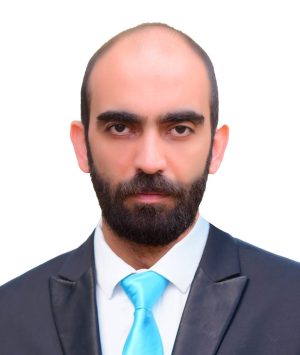
Dr. Waleed K. Mahmood is an Iraqi physicist specializing in laser and electro-optics, with a focus on nanotechnology applications. He holds a Ph.D. in Laser and Electro-Optics and is affiliated with the Phi NanoScience Center (PNSC) in Baghdad, Iraq, where he contributes to the Physical Applications Department.
Research Focus
Dr. Mahmood's research encompasses:
• Laser ablation techniques for synthesizing nanomaterials
• Gas sensing technologies, particularly for detecting NO₂
• Antibacterial applications of nanostructured materials
His notable publications include:
• "Eco-friendly Laser Ablation for Synthesis of CNF@Au Nanoparticles: Insights into Enhancing NO₂ Gas Detection and Antibacterial Activity"
• "Empowering NO₂ Detection: Synthesis of Highly Responsive Au/Cu-Doped Iron Oxide Nanoparticles as Gas Sensors Through Laser Ablation"
These studies highlight his contributions to developing advanced materials for environmental monitoring and healthcare applications.
Academic Contributions
Dr. Mahmood has authored multiple peer-reviewed articles, with his work cited in various scientific journals. His research has advanced the understanding of nanomaterial synthesis and their practical applications in sensing and antibacterial technologies.

Dr. Osama Abdul Azeez Dakhil
Scientific Consultation for nanotechnology
Dr. Osama Abdul Azeez Dakhil is a distinguished Iraqi physicist and professor at the Department of Physics, College of Science, Mustansiriyah University in Baghdad. He also serves as a scientific consultant at the Phi NanoScience Center (PNSC), contributing to advancements in nanotechnology and materials science.
Academic Background & Career
Dr. Dakhil began his academic career in 2002 as an assistant lecturer after earning his M.Sc. in Physics. Over the years, he has progressed through academic ranks, culminating in his current role as a professor.
Research Interests
Dr. Dakhil's research encompasses a broad spectrum of topics, including:
• Nanomaterials
• Plasma physics
• Photocatalysis
• Thin-film semiconductors
• Biosensors
• Antimicrobial nanotechnology
He has a particular interest in the synthesis and characterization of metal oxide nanostructures, such as ZnO, CuO, and NiO, for applications in energy conversion, environmental remediation, and biomedical devices. Dr. Dakhil has authored over 55 peer-reviewed publications, accumulating more than 10,000 reads and over 240 citations. His notable works include
• Synthesis of ZnO/CdS nanofibers for enhanced photocatalytic activity
• Development of CuO nanorods for non-enzymatic glucose biosensors
• Investigation of biofilm genes in Pseudomonas aeruginosa from clinical and environmental samples
Professional Affiliations
• Mustansiriyah University – Professor, Department of Physics
• Phi NanoScience Center (PNSC) – Scientific Consultant

Dr. Ali Kadhum Bidan
Department Of Chemistry
Dr. Ali Kadhum Bidan is a distinguished chemist affiliated with the Department of Chemistry at the College of Science, University of Basrah, Iraq. He earned his Ph.D. in Chemistry from the same institution and currently serves as a researcher at the Phi NanoScience Center (PNSC) in Baghdad.
Dr. Bidan's research primarily focuses on the green synthesis of metal nanoparticles, including silver, gold, and copper, utilizing plant-based biomaterials such as Jasminum sambac extracts. His work explores the biomedical applications of these nanoparticles, particularly their cytotoxic effects against breast cancer cell lines and antibacterial properties. Notable publications include studies on the biosynthesis of silver nanoparticles using essential oils of Jasminum sambac and their evaluation against breast cancer and bacterial cells. He has also investigated the role of biomaterial constituents in the synthesis of copper nanoparticles and their activities as anti-breast cancer and antibacterial agents.
Dr. Bidan's contributions to the field are recognized through his publications in peer-reviewed journals and his active engagement in interdisciplinary research at PNSC. His work advances the development of eco-friendly nanomaterials for biomedical applications.

Duaa M. Owid
Department of Biology
Duaa M. Owid is a researcher specializing in microbiology and antimicrobial sciences. She holds a Bachelor of Science in Biology and is currently affiliated with the Department of Antimicrobial at the Phi NanoScience Center (PNSC) in Baghdad, Iraq. Phi NanoScience Center (PNSC)
At PNSC, Ms. Owid contributes to interdisciplinary research focused on the development of nanomaterials for combating microbial resistance. Her work supports the center's mission to advance nanotechnology applications in healthcare and environmental protection.
For more information about her work or to explore potential collaborations, you can visit the Phi NanoScience Center's team page.
Dr. Wurood Asaad Midab
Department of Engineering
Dr. Wurood Asaad Midab is an accomplished Iraqi engineer and researcher specializing in metallurgical engineering, surface engineering, and nanomaterials. She is currently affiliated with the Training and Research Office at the Ministry of Electricity in Baghdad, Iraq, and also serves in the Department of Engineering at the Phi NanoScience Center (PNSC), a multidisciplinary research institute focused on nanotechnology applications.
Academic Background and Research Focus
Dr. Midab holds a Ph.D. in Metallurgical Engineering from the University of Babylon. Her research encompasses the development of advanced ceramic coatings, thermal barrier systems, and nanostructured materials aimed at enhancing the performance and durability of industrial components. She has made significant contributions to the field through her work on sol-gel deposition techniques and the application of yttria-stabilized zirconia (YSZ) coatings to improve the tribological properties of cutting tools.
Selected Publications and Contributions
Dr. Midab has authored over 15 peer-reviewed publications, with her work being cited in various scientific journals. Notable publications include:
• "Carbide Cutting Tool Coatings Characterization of 8YSZ"
• "Enhancement of Tribological Properties of Carbide Cutting Tools by Ceramic Coating Deposition"
• "Surface Modification of Cutting Tool by Multilayer Coatings: A Review Paper
Her research has been instrumental in advancing the understanding of surface modifications and their impact on tool performance and longevity .
Professional Engagements
Beyond her research, Dr. Midab has actively participated in international conferences, sharing her insights on materials science and engineering. She has also contributed to academic discussions through her involvement with Al Salam College University, where she has collaborated on various research projects.

Sarmad Abdul Razzaq Ibrahim
Department of Physics
Sarmad Abdul Razzaq Ibrahim is an Iraqi researcher and engineer specializing in applied physics and nanomaterials. He currently serves as the Head of the Department of Training and Electronic Services at the Phi NanoScience Center (PNSC) in Baghdad, Iraq. Phi NanoScience Center (PNSC)
Academic Background
Mr. Ibrahim earned his Master of Science degree in Applied Physics from the University of Technology – Iraq, completing his studies between September 2019 and January 2023. ResearchGate
Research Interests
His research focuses on material characterization, nanomaterials synthesis, and the development of advanced materials for biomedical applications. He has co-authored studies on enhancing the mechanical properties of polymethyl methacrylate (PMMA) denture base materials through reinforcement with stainless steel 316L wires. ResearchGate
Professional Engagements
In addition to his role at PNSC, Mr. Ibrahim is affiliated with the University of Technology – Iraq, contributing to the Department of Applied Sciences. ResearchGate
For more detailed information on Mr. Ibrahim's work and publications, you can visit his ResearchGate profile or his Google Scholar page.
Dr. Muqdad Kareem
Department of Parasitology-UK
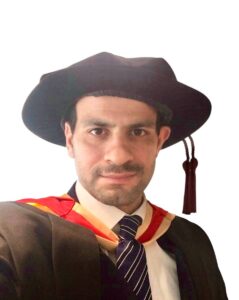
Dr. Muqdad Kareem is a molecular parasitologist with a PhD in Parasitology from the UK and is an Associate Fellow of the Higher Education Academy (AFHEA) from UK. He has taught molecular biology at keele university and is an active member of the British Society for Parasitology, the European Federation of Parasitologists, and the International Society for Infectious Diseases. His research focuses on microbiology, and parasitology, with a strong interest in molecular biology of eukaryotic and prokaryotic microbes.
Dr. Muqdad has presented his work at leading international conferences, including the Joint Parasitology Meeting-march 2025 (Würzburg, Germany), FEMS Congress July 2023 (Hamburg, Germany) Committed to advancing scientific knowledge, he continue to contribute to research and education in parasitology and infectious diseases.
Dr Muqdad currently faculty member of college of pharmacy teaching medical microbiology and biochemistry
Research and Consulting Fields
• Molecular Biology
• Microbiology biology and parasitology
• Drug screening assays
• Cell viability assays
Contact information:
muqdad.almosawi@gmail.com
(+)9647829622276
Dr. Ahmed A. Asi
Renewable energy
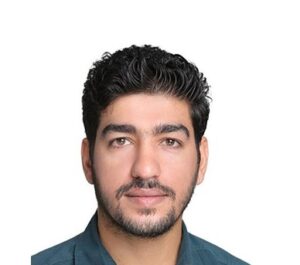
Dr. Ahmed Ali Asi is a dedicated physicist with deep expertise in lasers, optoelectronics, and solar energy conversion technologies. Holding a Ph.D. in Physics from the University of Baghdad, Dr. Asi has spent years advancing research in the fields of dye-sensitized solar cells (DSSCs) and perovskite solar cells (PSCs), contributing to the development of efficient, low-cost photovoltaic devices.
With a strong background in experimental and applied physics, Dr. Asi's work bridges the gap between theoretical innovation and practical engineering. His research interests span a wide array of areas including photonics, nanomaterials, semiconductor physics, and energy harvesting technologies.
In addition to his scientific research, Dr. Asi brings significant experience in academic teaching and curriculum development in physics and engineering subjects. He has taught undergraduate and postgraduate courses in optics, quantum mechanics, solid-state physics, and electronics. His commitment to education is matched by his skill in programming and simulation, using tools such as MATLAB, COMSOL Multiphysics, and LabVIEW for modeling physical systems and designing experiments.
Dr. Asi also has hands-on experience in electronic circuit design, sensor development, and instrumentation, making him highly versatile in both laboratory and industrial settings. His multidisciplinary skills enable him to collaborate across domains such as renewable energy, materials science, and optical communications.
He is actively involved in publishing research, presenting at international conferences, and staying current with the latest advances in green technology and photonics. Passionate about innovation, Dr. Ahmed Ali Asi continues to contribute to the global pursuit of sustainable energy solutions and technological advancement.