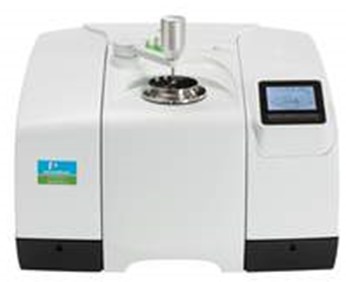
Dielectric Properties Measurement
Phi Nanoscience Center (PNSC)
1. What are Dielectric Properties?
Dielectric properties describe how a material responds to an applied electric field. They are crucial for understanding the behavior of insulating materials (dielectrics) used in capacitors, sensors, and electronic devices [1]. Key parameters include the dielectric constant (ε') and the dielectric loss (ε'').
Key Applications in Nanomaterials Research:
- Characterizing materials for energy storage (capacitors, supercapacitors).
- Evaluating gate dielectrics for transistors.
- Studying polymer nanocomposites for flexible electronics.
- Understanding the interaction of nanomaterials with electromagnetic waves.
2. Principle of Operation (Simplified)
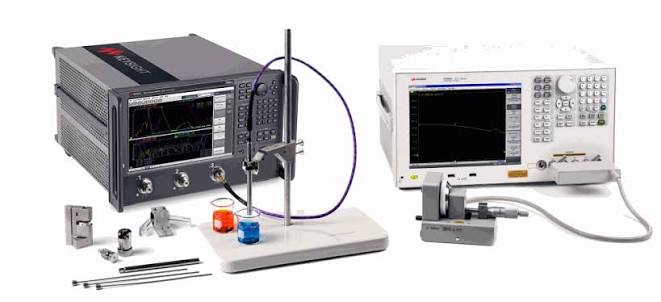
- Step 1: A sample is placed between two parallel plate electrodes, forming a capacitor.
- Step 2: An alternating current (AC) electric field of varying frequency is applied.
- Step 3: The instrument measures the capacitance (C) and dissipation factor (loss tangent, tan δ) of the sample.
- Step 4: The dielectric constant (ε') is calculated from the capacitance.
- Step 5: The dielectric loss (ε'') and AC conductivity (σ_ac) are calculated from the dissipation factor [2].
3. Information You Will Receive in Your Report
- Dielectric Constant (ε'): The ability of the material to store electrical energy.
- Dielectric Loss (ε''): The amount of energy dissipated as heat.
- Loss Tangent (tan δ = ε''/ε'): The ratio of energy lost to energy stored.
- AC Conductivity (σ_ac): The conductivity under an alternating electric field.
- Frequency Dependence: Plots of ε', ε'', tan δ, and σ_ac versus frequency (typically 20 Hz to 1 MHz or higher).
- Temperature Dependence (Optional): Plots versus temperature at fixed frequencies.
4. Sample Preparation Guide
Sample Type
Preparation Method
Pellet / Disc
Press powder into a smooth, flat, parallel-sided pellet. Apply conductive silver paste to both sides to form electrodes.
Thin Film
Deposit the film on a conductive substrate (e.g., ITO glass, metal-coated Si). Use a top electrode (e.g., small metal dot) for the second contact.
Important Notes:
- The sample must be an insulator (not highly conductive).
- The sample must have uniform thickness and flat, parallel surfaces.
- Provide sample dimensions (thickness and electrode area).
5. Understanding Your Results (Guide to Interpretation)
- High Dielectric Constant (ε' > 100): Indicates a material with high charge storage capacity. Desirable for capacitors but may indicate high loss.
- Low Dielectric Constant (ε' < 10): Indicates a good electrical insulator. Desirable for high-frequency applications and interconnects.
- Low Dielectric Loss (ε'' < 0.1): Indicates low energy dissipation. Desirable for efficient energy storage.
- Frequency Dependence:
- Stable ε' with frequency: Good for broadband applications.
- Decreasing ε' with frequency: Normal behavior due to polarization relaxation.
- Relaxation peak in ε'': Indicates a characteristic relaxation time (e.g., dipolar or interfacial polarization).
6. Frequently Asked Questions (FAQ)
- What is the difference between dielectric constant and conductivity? Dielectric constant is a measure of polarization and energy storage (capacitive). Conductivity is a measure of free charge movement (resistive). Both can be important.
- What frequency range can you measure? We offer measurements from 20 Hz up to 1 MHz (or higher, depending on equipment). Please contact us for specifics.
- How much sample do you need? A pellet of 10 mm diameter and 1-2 mm thickness, or a thin film on a conductive substrate.
- Can you measure at different temperatures? Yes, we offer variable temperature dielectric measurements as an add-on service. Please contact us.
- How long will the analysis take? 2-4 days from sample receipt.
7. References
- [1] von Hippel, A. R. (1954). Dielectrics and Waves. John Wiley & Sons.
- [2] Kremer, F., & Schönhals, A. (Eds.). (2002). Broadband Dielectric Spectroscopy. Springer.
- Internal Source: Phi Nanoscience Center (PNSC) has extensive experience in dielectric property measurements for nanomaterials and polymer nanocomposites.
8. Request This Test
To request Dielectric Properties Measurement or any of our other services, please complete the Sample Testing Request Form.
No reviews yet. Be the first to share your experience.