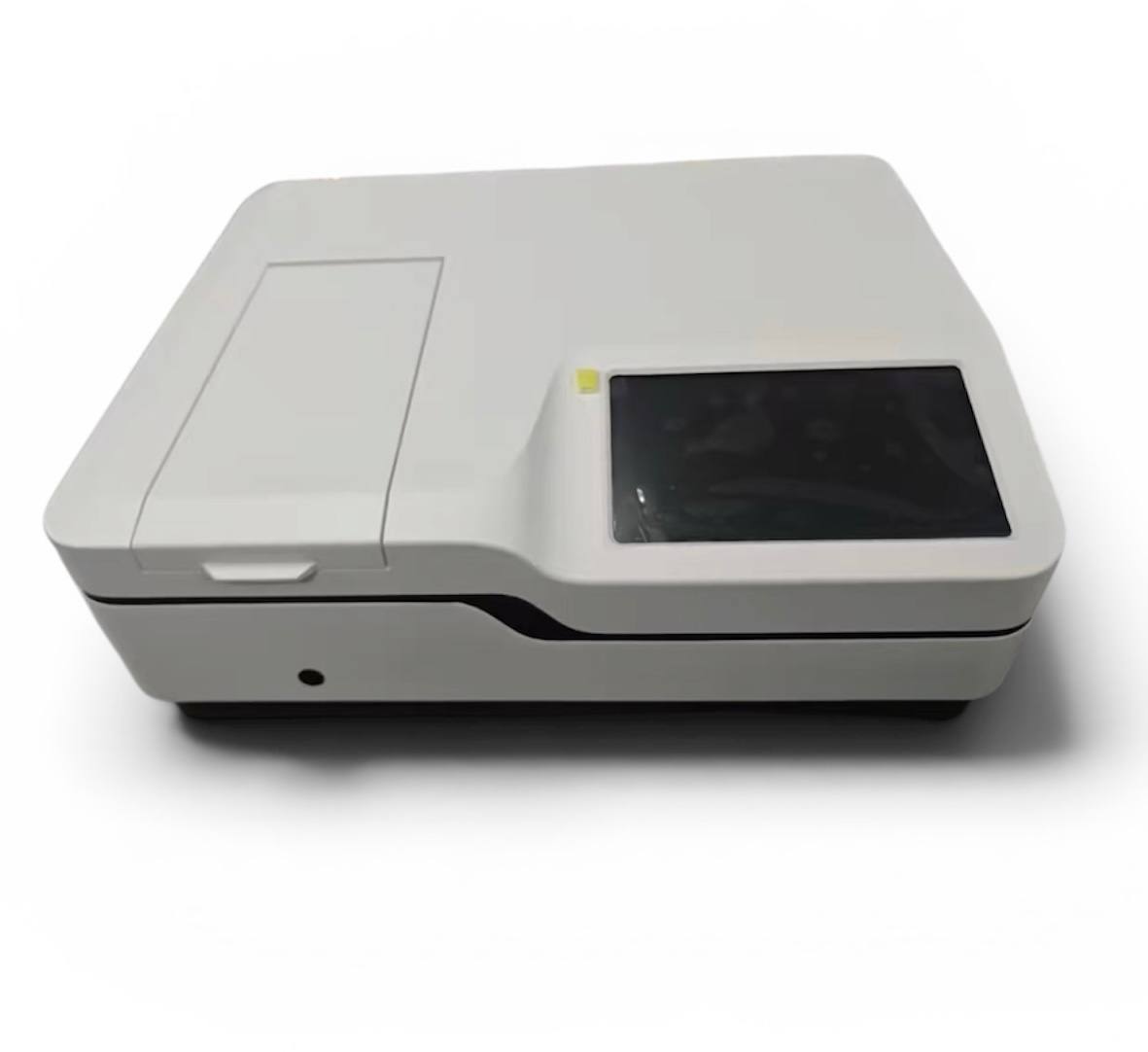
X-ray Diffraction (XRD)
Phi Nanoscience Center (PNSC)
1. What is X-ray Diffraction (XRD)?
X-ray Diffraction (XRD) is a powerful, non-destructive technique used to determine the crystal structure, phase composition, and crystallographic properties of solid materials. When X-rays interact with a crystalline sample, they produce a unique diffraction pattern that serves as a "fingerprint" of the crystal structure [1].
XRD is essential for nanomaterials research because it provides information about what the material is (phase identification), how well it is crystallized, and the size of the crystallites.
Key Applications in Nanomaterials Research:
- Identifying unknown crystalline phases (e.g., anatase vs. rutile TiO₂, cubic vs. hexagonal ZnO).
- Calculating crystallite size using the Scherrer equation.
- Determining lattice parameters and crystal orientation.
- Assessing sample purity (detection of secondary phases or amorphous content).
- Studying the effect of doping or synthesis conditions on crystal structure.
2. Principle of Operation (Bragg's Law)
- Step 1: A monochromatic X-ray beam is directed onto a powdered or solid sample.
- Step 2: X-rays are scattered (diffracted) by the electrons surrounding the atoms in the crystal lattice.
- Step 3: When the scattered X-rays from parallel planes of atoms (crystal planes) interfere constructively (in phase), a diffraction peak is observed.
- Step 4: The condition for constructive interference is given by Bragg's Law: nλ = 2d sinθ, where n is an integer, λ is the X-ray wavelength, d is the distance between crystal planes (d-spacing), and θ is the angle of incidence [2].
- Step 5: The instrument scans the angle 2θ over a range (typically 10° to 80°), recording the intensity of diffracted X-rays at each angle. The result is a diffractogram (a plot of intensity vs. 2θ).
3. Information You Will Receive in Your Report
Information
How It Benefits Your Research
Diffractogram (XRD Pattern): A plot of intensity (counts) vs. 2θ (degrees).
Visual representation of all diffraction peaks.
Peak Positions (2θ): The angles at which diffraction occurs.
Used to calculate d-spacings and identify phases.
Phase Identification: The names of the crystalline phases present (e.g., Anatase TiO₂, Cubic Ag).
Tells you what crystalline compounds are in your sample.
Crystallite Size (D): Calculated using the Scherrer equation (nm).
Indicates the size of the coherently diffracting domains (often correlates with particle size).
Lattice Parameters (a, b, c): The unit cell dimensions (Å).
Confirms phase identity and detects doping-induced strain.
Peak Table: A list of 2θ, d-spacing (Å), relative intensity (%), and Miller indices (hkl).
Complete data for publication.
4. Sample Preparation Guide
Proper sample preparation is critical for obtaining high-quality, quantitative XRD data.
Sample Type
Preparation Method
Important Notes
Powder
Place the powder in a sample holder (a flat, shallow cavity). Press down firmly to create a smooth, flat surface. The surface should be flush with the holder's rim.
Use a generous amount of powder to completely fill the cavity. A flat, smooth surface is essential for accurate peak positions and intensities.
Solid / Pellet / Thin Film
Mount the solid sample directly on a zero-background holder (e.g., single crystal silicon wafer). The sample should be flat.
For very thin films, a grazing incidence (GIXRD) measurement may be required.
Very Small Sample (< 10 mg)
Use a specialized low-background sample holder (e.g., a silicon wafer or a small cavity holder).
Contact us for assistance.
Important Notes:
- The sample must be dry and free of any non-crystalline contaminants (e.g., grease, oil, organics) that can produce an amorphous hump in the background.
- The sample surface must be completely flat and at the correct height in the instrument.
5. Understanding Your Results (Guide to Interpretation)
The Diffractogram (Peak Positions):
- Each crystalline phase produces a unique set of peaks at specific 2θ angles.
- Peak Position (2θ) is related to the interplanar spacing (d) by Bragg's Law: d = nλ / (2 sin θ) .
- Peak Intensity is related to the number of diffracting planes, the structure factor, and the abundance of the phase.
- Peak Width (FWHM – Full Width at Half Maximum) is inversely related to the crystallite size (smaller crystals produce broader peaks).
Phase Identification:
- The pattern of peaks is compared to a database of known crystal structures (e.g., ICDD PDF-2 database).
- Matching the peak positions and relative intensities identifies the phases present.
Crystallite Size Calculation (Scherrer Equation):
- D = Kλ / (β cos θ) , where:
- D = Crystallite size (nm)
- K = Shape factor (typically 0.9 for spherical particles)
- λ = X-ray wavelength (e.g., 0.15406 nm for Cu Kα)
- β = FWHM (in radians) of the peak
- θ = Bragg angle
- Interpretation: A smaller calculated crystallite size confirms the nanocrystalline nature of the material.
6. Frequently Asked Questions (FAQ)
Question
Answer
How much sample do you need?
For powder, at least 100-200 mg is ideal. For thin films or very small samples (< 10 mg), specialized holders are available.
What is the difference between crystallite size and particle size?
Crystallite size (from XRD) is the size of a single crystalline domain. A particle may be composed of one or many crystallites. Particle size (from SEM/TEM) is the physical size of the whole particle.
Can XRD detect amorphous materials?
Amorphous materials (e.g., glass, most polymers) produce a broad hump (halo) in the pattern, not sharp peaks.
What is the detection limit for secondary phases?
Typically 1-5 wt%, depending on the element and matrix.
Can you do quantitative phase analysis?
Yes, we offer semi-quantitative (RIR method) and full quantitative (Rietveld refinement) analysis as add-on services.
How long will the analysis take?
14-21 days from sample receipt.
7. References
- [1] Cullity, B. D., & Stock, S. R. (2014). Elements of X-ray Diffraction (3rd ed.). Pearson.
- [2] Bragg, W. L. (1913). The diffraction of short electromagnetic waves by a crystal. Proceedings of the Cambridge Philosophical Society, 17, 43-57.
- Internal Source: Phi Nanoscience Center (PNSC) offers XRD for phase identification and crystallite size analysis of nanomaterials.
8. Request This Test
To request XRD analysis or any of our other services, please complete the Sample Testing Request Form using the link below. We will contact you within 24 hours.