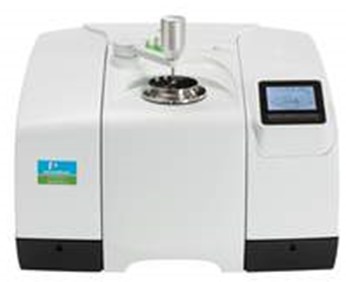
1. Thermogravimetric Analysis (TGA)
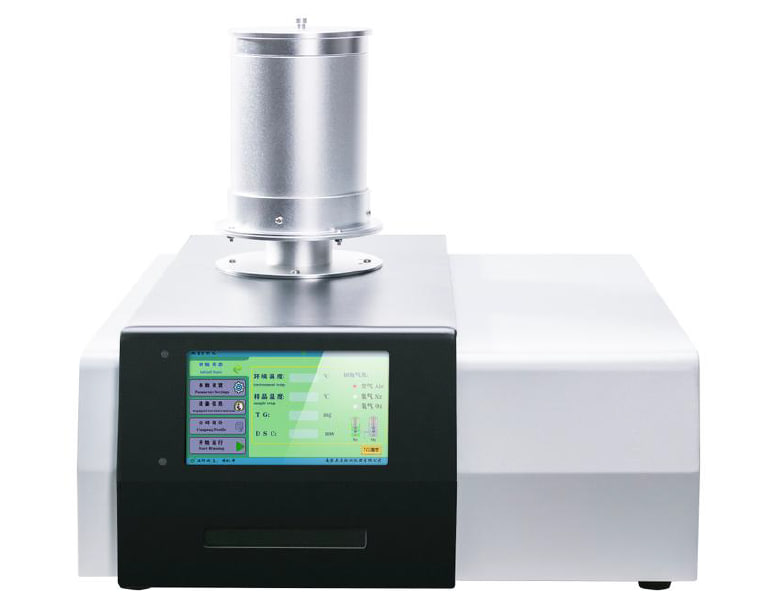
Thermogravimetric Analysis (TGA) is a thermal analysis technique that measures the change in mass of a sample as a function of temperature or time. It is performed under a controlled atmosphere (e.g., nitrogen or air) and is essential for studying the thermal stability, composition, and decomposition behavior of materials [1].
Key Applications in Nanomaterials and Pharmaceutical Research:
- Determining the thermal stability and decomposition temperature of materials.
- Quantifying the amount of organic content (e.g., stabilizers, surfactants) in inorganic nanoparticles.
- Measuring drug loading efficiency in drug delivery systems.
- Analyzing moisture content, residual solvents, and volatile components.
- Studying the composition of composites and polymer blends.
2. Principle of Operation (Simplified)
A small sample (typically 5-20 mg) is placed in a crucible and suspended from a highly sensitive balance inside a furnace. As the furnace temperature increases (at a controlled heating rate), the sample undergoes physical and chemical changes (e.g., evaporation, decomposition, oxidation). The instrument continuously records the weight change, generating a TGA curve (weight % vs. temperature). The derivative of this curve (DTG) highlights the temperature of maximum weight loss [2].
3. Information You Will Receive in Your Report
- TGA Curve: A plot of weight (%) versus temperature (°C), showing the decomposition profile of your sample.
- DTG Curve (Derivative): A plot highlighting the temperature of maximum weight loss for each step.
- Decomposition Temperatures (Td): The onset and offset temperatures for each weight loss event.
- Quantitative Composition: The percentage of each component (e.g., water, organic content, inorganic residue).
- Drug Loading Efficiency: Calculated from the weight loss corresponding to drug decomposition.
- Technical Report: A summary of conditions (heating rate, atmosphere, crucible type) and an interpretation of the results.
4. Sample Preparation Guide
Proper sample preparation is straightforward but critical for accurate and reproducible results.
- Step 1: Use a dry, solid sample in powder or small pellet form.
- Step 2: Place approximately 5-20 mg of the sample into a clean, dry ceramic (alumina) or platinum crucible.
- Step 3: Ensure the sample is evenly spread on the bottom of the crucible to allow for uniform heat transfer.
- Step 4: For liquid or viscous samples, use a sealed or hermetic pan to prevent rapid evaporation before the measurement starts.
Important Note: The sample must be compatible with the crucible material and should not react with it at high temperatures.
5. Understanding Your Results (Guide to Interpretation)
A typical TGA curve shows weight loss steps as the temperature increases.
- Below 150°C: Weight loss in this region is usually due to the evaporation of moisture or residual solvents.
- 150°C – 400°C: Weight loss is often attributed to the decomposition of organic materials (e.g., polymers, surfactants, drugs). The temperature range depends on the specific organic compound.
- 400°C – 600°C: Weight loss may be due to the decomposition of more thermally stable organics or the onset of carbon oxidation in air.
- Above 600°C: The remaining weight is typically the inorganic residue (e.g., metal oxides, ceramics, ash). In an inert atmosphere (nitrogen), carbon may remain as a residue.
Example for Silver Nanoparticles (AgNPs) stabilized with PVP:
- A weight loss of 10-20% between 200-450°C corresponds to the decomposition of the PVP coating.
- The remaining weight (80-90%) is the metallic silver core, confirming successful synthesis and the amount of inorganic content.
6. Frequently Asked Questions (FAQ)
- How much sample do you need? 5-20 mg of solid powder is sufficient.
- What type of crucible should I use? Alumina or platinum crucibles are standard. Platinum is preferred for high-temperature or corrosive samples.
- What heating rate should I use? A standard heating rate of 10°C/min is common for general analysis. Slower rates (2-5°C/min) provide better resolution of close decomposition steps.
- What is the difference between running TGA in air vs. nitrogen? In nitrogen (inert), decomposition occurs via pyrolysis. In air (oxidative), organic materials will combust completely, leaving no carbon residue.
- How long will the analysis take? 48-72 hours from sample receipt (allowing for method development and analysis).
7. References
- [1] Prime, R. B., et al. (2009). Thermogravimetric Analysis (TGA). In Thermal Analysis of Polymers: Fundamentals and Applications. John Wiley & Sons.
- [2] Hatakeyama, T., & Quinn, F. X. (1999). Thermal Analysis: Fundamentals and Applications to Polymer Science. John Wiley & Sons.
8. Request This Test
To request TGA analysis or any of our other services, please complete the Sample Testing Request Form using the link below. We will contact you within 24 hours.
No reviews yet. Be the first to share your experience.