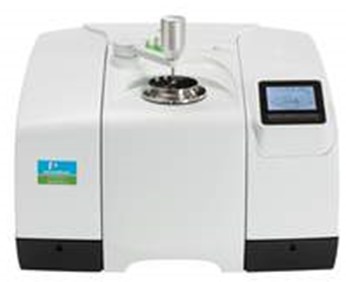
VSM (Vibrating Sample Magnetometry)
Phi Nanoscience Center (PNSC)
1. What is VSM?
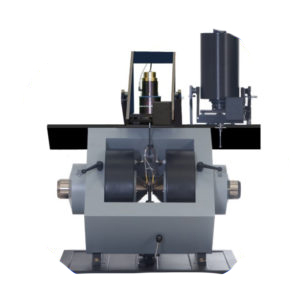
Vibrating Sample Magnetometry (VSM) is a powerful technique used to measure the magnetic properties of materials. It is the standard method for characterizing magnetic nanomaterials, including superparamagnetic, ferromagnetic, and antiferromagnetic nanoparticles [1].
Key Applications in Nanomaterials Research:
- Determining saturation magnetization (Ms) – the maximum magnetic moment.
- Measuring remanence (Mr) – the remaining magnetization after the field is removed.
- Determining coercivity (Hc) – the field required to demagnetize the material.
- Classifying magnetic behavior: superparamagnetic, ferromagnetic, or antiferromagnetic.
2. Principle of Operation (Simplified)
- Step 1: A powdered or solid sample is placed in a small sample holder.
- Step 2: The sample is positioned between the poles of an electromagnet, which applies a known external magnetic field (H).
- Step 3: The sample is vibrated (oscillated) vertically at a fixed frequency.
- Step 4: This vibration induces a voltage in a set of pickup coils proportional to the sample's magnetic moment (M) .
- Step 5: The instrument scans the applied field (H) from a negative to positive maximum and back, generating an M-H hysteresis loop [2].
3. Information You Will Receive in Your Report
Information
How It Benefits Your Research
M-H Hysteresis Loop
Plot of magnetization (M, emu/g) vs. applied field (H, Oe).
Saturation Magnetization (Ms)
Maximum magnetization (emu/g or emu/cm³).
Remanent Magnetization (Mr)
Magnetization remaining after the field is removed (emu/g).
Coercivity (Hc)
Field required to reduce magnetization to zero (Oe).
Squareness Ratio (Mr/Ms)
Indicates the shape of the hysteresis loop.
Magnetic Classification
Superparamagnetic (no hysteresis), Ferromagnetic (hysteresis), or Antiferromagnetic.
4. Sample Preparation Guide
Sample Type
Preparation Method
Powder
Pack the powder tightly into a non-magnetic sample holder (e.g., gelatin capsule, quartz tube).
Liquid / Colloidal Suspension
Place the liquid in a sealed non-magnetic container (e.g., plastic or quartz tube).
Solid / Bulk
Cut or shape the sample to fit the sample holder.
Important Notes:
- The sample must be non-reactive with the sample holder.
- Provide the sample mass (in mg) accurately. A sample mass of 10-50 mg is typically required.
5. Understanding Your Results (Guide to Interpretation)
- Superparamagnetic (e.g., small Fe₃O₄, γ-Fe₂O₃):
- Hysteresis Loop: No hysteresis (reversible). Mr = 0, Hc = 0.
- Interpretation: Particles flip magnetic orientation randomly. No permanent magnetization. Ideal for biomedical applications.
- Ferromagnetic (e.g., larger Fe₃O₄, Co, Ni):
- Hysteresis Loop: Hysteresis present. Mr > 0, Hc > 0.
- Interpretation: Particles retain magnetization. Used for data storage and permanent magnets.
- Antiferromagnetic (e.g., MnO, NiO):
- Hysteresis Loop: Nearly linear, very low Ms, no hysteresis.
6. Frequently Asked Questions (FAQ)
Question
Answer
How much sample do you need?
10-50 mg of powder or a liquid suspension with a known concentration.
What is the difference between VSM and SQUID?
Both measure magnetic properties. SQUID is more sensitive (for very small samples or weak signals) but much more expensive and slower. VSM is the standard for most nanomaterial samples.
Can you measure temperature-dependent magnetism?
Yes, we offer variable temperature VSM as an add-on service.
How long will the analysis take?
2-4 days from sample receipt.
7. References
- [1] Cullity, B. D., & Graham, C. D. (2009). Introduction to Magnetic Materials (2nd ed.). John Wiley & Sons.
- [2] Foner, S. (1959). Versatile and sensitive vibrating-sample magnetometer. Review of Scientific Instruments, 30(7), 548-557.
8. Request This Test
To request VSM analysis or any of our other services, please complete the Sample Testing Request Form.
No reviews yet. Be the first to share your experience.