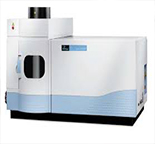
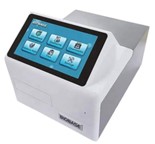
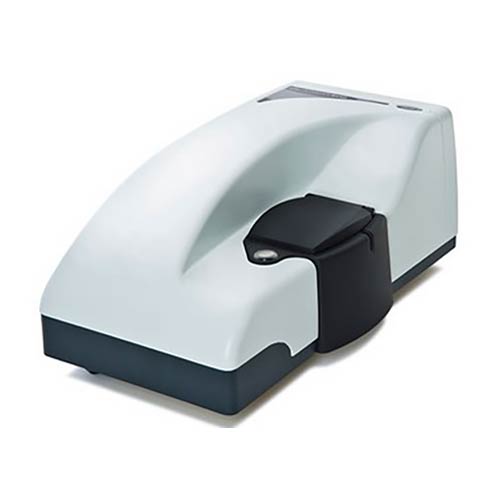
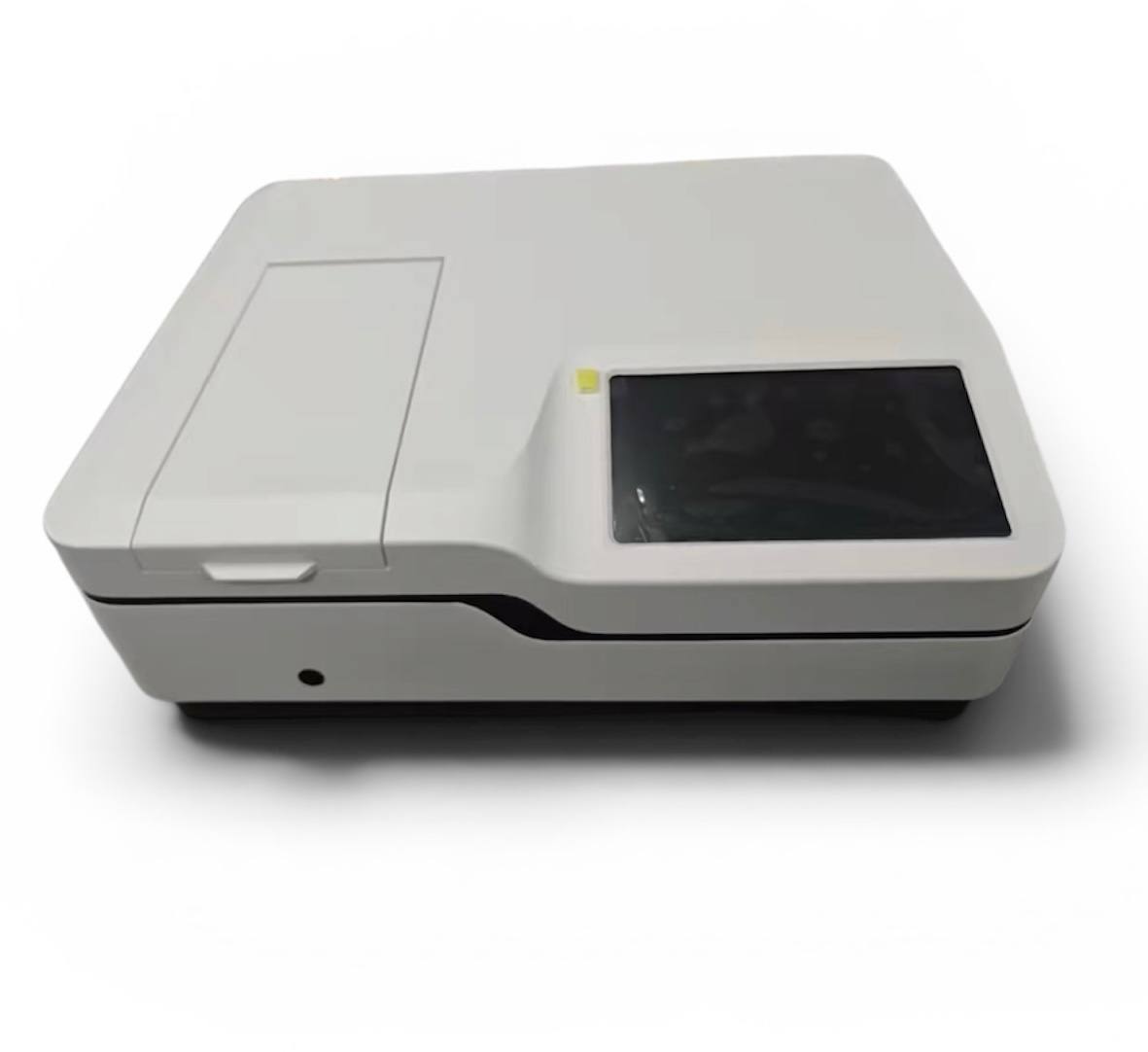
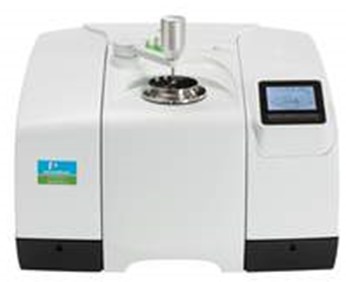
ICP-OES / ICP-MS (Inductively Coupled Plasma Spectroscopy)
Phi Nanoscience Center (PNSC)
1. What are ICP-OES and ICP-MS?
ICP-OES (Inductively Coupled Plasma Optical Emission Spectrometry) and ICP-MS (Inductively Coupled Plasma Mass Spectrometry) are the most powerful and widely used techniques for trace and ultra-trace elemental analysis. They can identify and quantify almost all elements in the periodic table simultaneously, from major components down to parts-per-trillion levels .
These techniques are essential for applications requiring high sensitivity, multi-element capability, and wide dynamic range.
Key Applications in Nanomaterials and Materials Research:
- Determining the purity and exact elemental composition of synthesized nanomaterials (e.g., % Ag in AgNPs, % Ce in CeO₂ NPs).
- Analyzing trace metal contaminants in water, soil, and environmental samples.
- Quantifying elemental content in pharmaceuticals, food, and biological samples (e.g., blood, tissue) .
- Quality control for raw materials and finished products in manufacturing (e.g., metals, alloys, ceramics).
- Characterizing the elemental composition of catalysts, battery materials, and advanced coatings.
ICP-OES is ideal for major and minor elements (ppm to % levels) with high matrix tolerance .
ICP-MS is required for trace and ultra-trace elements (ppt to ppm levels) with superior sensitivity but requires cleaner samples and lower dissolved solids .
2. Principle of Operation (Simplified)
Both techniques share the same sample introduction and plasma source:
- Step 1 (Nebulization): The liquid sample is converted into a fine aerosol (mist) by a nebulizer.
- Step 2 (Plasma): The aerosol is carried into an inductively coupled plasma (argon gas heated to ~6,000-10,000 °C). The plasma completely atomizes and ionizes the sample .
ICP-OES (Optical Emission):
- Step 3 (Emission): As excited atoms in the plasma return to their ground state, they emit light at characteristic wavelengths specific to each element.
- Step 4 (Detection): An optical spectrometer separates the light by wavelength, and a detector measures the intensity of each emission line. The intensity is proportional to the concentration of the element.
ICP-MS (Mass Spectrometry):
- Step 3 (Ion Extraction): The ions generated in the plasma are extracted into a mass spectrometer.
- Step 4 (Mass Separation): A quadrupole mass analyzer separates ions based on their mass-to-charge ratio (m/z) .
- Step 5 (Detection): A detector counts the number of ions at each mass. The count rate is proportional to the concentration of the element.
3. Information You Will Receive in Your Report
Information
How It Benefits Your Research
Elemental Concentration (ppm, ppb, wt%): The quantified concentration of each element detected.
Tells you exactly how much of each element is present (e.g., 99.8 wt% Ag, 0.2 wt% O).
Multi-Element Profile: A complete list of all elements detected in your sample.
Answers the question: "What is my sample made of?"
Detection Limits (LOD): The minimum concentration that can be reliably detected.
Validates the sensitivity of the measurement for trace elements.
Quality Control Data: Results from certified reference materials, spikes, and blanks.
Demonstrates the accuracy and reliability of the results.
Sample Preparation Summary: Details of digestion method, dilution factor, and any corrections applied.
Ensures traceability and reproducibility.
4. Sample Preparation Guide
Proper sample preparation is critical for both techniques. Samples must be introduced as a clear, particle-free liquid solution in dilute acid (typically 2% HNO₃) .
Sample Type
Preparation Method
Important Notes
Solid / Powder (e.g., nanoparticles, soil, catalyst)
Acid Digestion: The sample is digested using a combination of strong acids (e.g., HNO₃, HCl, HF) and heat, often in a microwave digestion system, to completely dissolve the material into a liquid solution .
A clear solution is essential. The digestion method must be tailored to the sample matrix. Total dissolved solids (TDS) must be < 0.2% for ICP-MS and < 0.5-2% for ICP-OES .
Liquid / Water
Dilution with 2% HNO₃. May require filtration (0.45 µm) if not clear .
Must be free of particulates to prevent clogging the nebulizer.
Biological / Blood / Tissue
Acid digestion (typically with HNO₃ and H₂O₂) in a microwave digestion system .
Requires careful handling and removal of organic matrix.
General Requirements for ICP Analysis:
Requirement
ICP-OES
ICP-MS
Minimum Sample Volume
5-10 mL
3-5 mL
Preferred Matrix
2% HNO₃
2% HNO₃
Total Dissolved Solids (TDS)
< 0.5-2% (can be higher with specialized systems)
< 0.1-0.2% (higher TDS clogs cones and causes signal suppression)
Particle Free?
Yes (must pass through 0.45 µm filter)
Hydrofluoric Acid (HF)
Not accepted (destroys quartz components)
Not accepted (destroys quartz components and cones)
Important Notes:
- Always include a method blank (processed identically to samples, but with no sample) to correct for contamination from reagents and digestion vessels.
- Use certified reference materials for quality control to validate the accuracy of the digestion and analysis .
5. Understanding Your Results (Guide to Interpretation)
- ICP-OES vs. ICP-MS: Which one is right for your sample?
- Choose ICP-OES for: Major elements (> 100 ppm), high matrix samples (e.g., brines, digests with high salt content), and when ppb-level detection limits are not required .
- Choose ICP-MS for: Trace and ultra-trace elements (< 100 ppm, down to sub-ppt), when low detection limits are critical, and when sample volume is limited .
- Interpreting Results:
- High Concentration (e.g., > 1000 ppm): Indicates a major component. For ICP-OES, dilute the sample to bring it within the calibration range. For ICP-MS, significant dilution is required.
- Low or Non-Detectable (< LOD): The element is either absent or present below the detection limit. This is common for trace impurities in high-purity materials.
- Comparing to Certification: For certified reference materials, your result should fall within the certified range (e.g., mean ± uncertainty). Deviations indicate a problem with digestion, calibration, or contamination.
6. Frequently Asked Questions (FAQ)
Question
Answer
What is the difference between ICP-OES and ICP-MS?
ICP-OES measures light emission and is best for major/minor elements (ppm to %). ICP-MS measures ions by mass and is best for trace/ultra-trace elements (ppt to ppm) .
What elements can you detect?
Most elements from Lithium (Li) to Uranium (U). ICP-MS cannot detect elements with low mass (e.g., H, He) and certain gases.
What are typical detection limits?
ICP-OES: 0.1-10 µg/L (ppb). ICP-MS: 0.001-0.1 µg/L (ppt) .
Why is sample preparation so important?
Because ICP requires a clear, particle-free, dilute acid solution. Undigested particles or high dissolved solids will clog the nebulizer and torch, damage the instrument, and produce inaccurate results .
How much sample do you need?
For solids, 0.1-1 g is typically sufficient. For liquids, 10-15 mL for ICP-OES and 5-10 mL for ICP-MS . For precious samples, contact us to discuss micro-volume options.
How long will the analysis take?
14-21 days from sample receipt, depending on the complexity of the digestion method and the number of samples.
7. References
- [1] Thomas, R. (2013). Practical Guide to ICP-MS: A Tutorial for Beginners (3rd ed.). CRC Press.
- [2] Hou, X., & Jones, B. T. (2000). Inductively Coupled Plasma-Optical Emission Spectrometry. In Encyclopedia of Analytical Chemistry. John Wiley & Sons.
- Internal Source: Phi Nanoscience Center (PNSC) offers ICP-OES and ICP-MS analysis for a wide range of sample matrices. Our methods follow standard EPA and ISO protocols.
8. Request This Test
To request ICP-OES or ICP-MS analysis or any of our other services, please complete the Sample Testing Request Form using the link below. We will contact you within 24 hours to discuss your sample matrix, digestion requirements, and specific elements of interest.