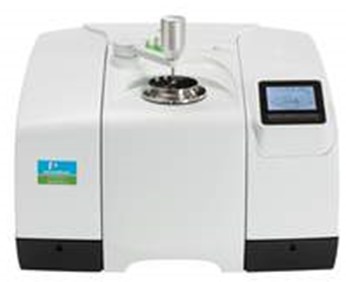
X-ray Fluorescence (XRF) Spectroscopy
Phi Nanoscience Center (PNSC)
1. What is XRF Spectroscopy?
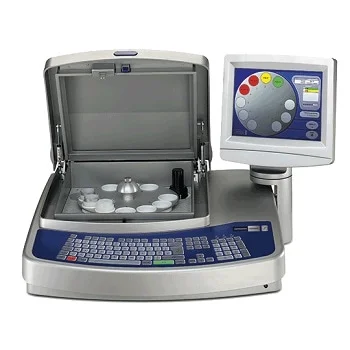
X-ray Fluorescence (XRF) is a powerful, non-destructive analytical technique used to determine the elemental composition of solid, powder, and liquid samples. It is widely used for quality control, material identification, and elemental quantification in industries such as mining, metallurgy, cement, and environmental monitoring [1].
XRF is particularly valuable for characterizing bulk materials, alloys, ores, cements, and geological samples.
Key Applications in Nanomaterials and Materials Research:
- Identifying and quantifying the elemental composition (major and minor elements) of a material.
- Quality control for raw materials (e.g., purity of metal oxides, cements, and alloys).
- Determining the concentration of trace elements in environmental samples (soil, water, filters) .
- Sorting scrap metals and alloys.
- Verifying the composition of finished products (e.g., cement, glass, ceramics).
2. Principle of Operation (Simplified)
- Step 1: A high-energy X-ray beam (or sometimes an electron beam) is directed at the sample.
- Step 2: The X-rays eject inner-shell electrons from atoms in the sample.
- Step 3: Outer-shell electrons fall into the vacancies, releasing energy in the form of characteristic X-rays (fluorescence).
- Step 4: The energy of the emitted X-ray is characteristic of the specific element that produced it (like an elemental fingerprint).
- Step 5: A detector collects these X-rays and measures their energies.
- Step 6: An XRF spectrum (X-ray energy vs. intensity) is generated, with peaks identifying the elements present [2].
3. Information You Will Receive in Your Report
Information
How It Benefits Your Research
XRF Spectrum: A plot of X-ray energy (keV) vs. intensity (counts).
Visual identification of elemental peaks.
Qualitative Elemental Analysis: A list of all elements detected in the sample.
Answers the question: "What elements are present?"
Semi-Quantitative Composition (wt% or ppm): A table of elements with their estimated concentrations (e.g., CaO: 42.5%, SiO₂: 25.1%).
Provides a quick, non-destructive estimate of sample composition.
Quantitative Composition (wt% or ppm): Accurate concentrations, including oxides (e.g., CaO, SiO₂, Al₂O₃, Fe₂O₃).
Certified for quality control and regulatory reporting (requires standards).
Material Classification: For alloys, the results can be compared to standards to identify the specific alloy grade (e.g., 316 stainless steel).
Rapid material identification for quality control.
4. Sample Preparation Guide
Proper sample preparation is critical for accurate XRF results.
Sample Type
Preparation Method
Important Notes
Powder (e.g., cement, ore, soil)
The powder must be ground to a fine, homogeneous powder (to minimize particle size effects) and then pressed into a smooth, flat pellet, often using a binding agent (e.g., wax or boric acid).
Particle size and packing density significantly affect the intensity of the X-ray signal; a uniform pellet is essential for accurate quantification.
Solid / Metal / Alloy
The surface should be clean, flat, and free of coatings, oil, or oxides. For metals, a machined or polished surface is ideal.
The analysis is surface-sensitive (10s of µm depth). The surface condition must be representative of the bulk material.
Liquid
The liquid is poured into a specialized sample cup sealed with a thin X-ray transparent film (e.g., polypropylene or Mylar).
The cup must be completely filled to ensure a consistent path length for the X-rays.
Filter (Air/Dust)
The filter is placed directly in the X-ray beam with appropriate backing.
Used for environmental monitoring of particulate matter.
Important Notes:
- No Vacuum Issues: XRF does not require high vacuum; it can often be performed in air. For light element analysis (e.g., Na, Mg), a helium purge or vacuum is used.
- Sample Size: The analysis area is typically 10-30 mm in diameter.
5. Understanding Your Results (Guide to Interpretation)
- Peak Position (keV): Identifies which elements are present. Each element has a unique set of X-ray peaks (e.g., iron (Fe) has peaks at ~6.4 and ~7.0 keV).
- Peak Height/Area: Related to the concentration of the element. Higher intensity = higher concentration.
- Oxide Reporting: By convention, XRF results are often reported as oxides (e.g., CaO, SiO₂, Al₂O₃, Fe₂O₃), especially for geological and cement samples. The instrument measures the elements and calculates the equivalent oxide concentration based on stoichiometry.
- Semi-Quantitative vs. Quantitative:
- Semi-Quantitative: "Standard-less" analysis. Good for screening and comparing samples. Accuracy is typically 10-20% relative.
- Quantitative: Requires matrix-matched standards. Accuracy can be < 1% relative for major elements.
6. Frequently Asked Questions (FAQ)
Question
Answer
What elements can XRF detect?
Typically from Sodium (Na, Z=11) to Uranium (U, Z=92). Specialized instruments can detect lighter elements (down to Beryllium, Z=4). Cannot detect Hydrogen, Helium, or Lithium.
What is the detection limit?
For trace elements in a solid matrix, detection limits are typically in the 1-10 ppm range. For light elements, detection limits are higher (0.1-0.5 wt%).
How much sample do you need?
A pressed pellet of at least 1-2 grams of powder, or a solid sample with a flat area of at least 1 x 1 cm.
What is the difference between XRF and EDX (in SEM)?
XRF is for bulk analysis of a large sample area, has lower detection limits, and is better for quantification. EDX in SEM is for micro-area analysis at high spatial resolution but is only semi-quantitative.
Is XRF destructive?
No, XRF is completely non-destructive. The sample can be recovered and used for other tests.
How long will the analysis take?
24-48 hours from sample receipt.
7. References
- [1] Jenkins, R. (1999). X-ray Fluorescence Spectrometry (2nd ed.). John Wiley & Sons.
- [2] Beckhoff, B., et al. (Eds.). (2006). Handbook of Practical X-Ray Fluorescence Analysis. Springer.
- Internal Source: Phi Nanoscience Center (PNSC) offers XRF for elemental analysis of cements, ores, metals, and environmental samples.
8. Request This Test
To request XRF analysis or any of our other services, please complete the Sample Testing Request Form using the link below. We will contact you within 24 hours.