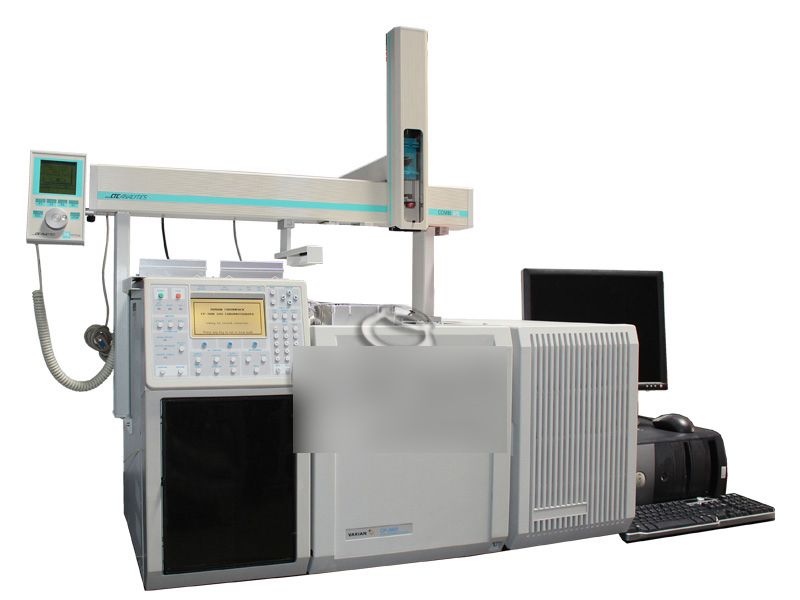
Gas Chromatography-Mass Spectrometry (GC-MS) is a powerful hyphenated analytical technique that combines the high-resolution separation capability of Gas Chromatography (GC) with the structural identification and quantification power of Mass Spectrometry (MS) . It is one of the most widely used and reliable techniques for analyzing volatile and semi-volatile organic compounds in complex mixtures [1].
GC-MS is an essential tool for research in environmental science, pharmaceuticals, food safety, forensics, and petrochemicals because it provides both qualitative identification and quantitative analysis in a single run [2].
Key Applications in Nanomaterials Research:
- Characterization of Surface Coatings: Identifying organic ligands, surfactants, and functional groups attached to nanoparticles.
- Analysis of Residual Solvents: Detecting and quantifying solvents used in nanomaterial synthesis.
- Degradation and Byproduct Analysis: Studying the stability of nanomaterials and identifying degradation products.
- Metabolomics and Biomarker Discovery: Profiling metabolites in biological samples for disease research.
- Environmental Monitoring: Detecting pollutants, pesticides, and persistent organic pollutants (POPs) in environmental samples.
2. Principle of Operation (Simplified)
The analysis is performed in two sequential stages:
- Gas Chromatography (Separation):
- The liquid sample is injected into a heated injection port, where it is vaporized.
- An inert carrier gas (usually Helium) transports the vaporized sample through a long, narrow capillary column coated with a thin layer of a stationary phase (a liquid or polymer).
- As the sample travels through the column, its components interact differently with the stationary phase. Components with higher affinity for the stationary phase move more slowly.
- This differential interaction causes the components to elute (exit the column) at different times, known as Retention Times (RT) . This is the separation step [1].
- Mass Spectrometry (Detection & Identification):
- As each component elutes from the GC column, it enters the mass spectrometer.
- The molecules are ionized (typically by Electron Impact - EI), which fragments them into charged particles (ions).
- The ions are then separated based on their mass-to-charge ratio (m/z) by a mass analyzer (usually a quadrupole).
- A detector counts the ions at each m/z value, generating a mass spectrum – a unique "fingerprint" for each compound [2].
- The instrument records both the Retention Time and the Mass Spectrum for every compound in the sample.
Common Ionization Methods:
Method
Description
Best For
Electron Impact (EI)
High-energy electrons (70 eV) fragment molecules into characteristic ions.
Most common method. Produces highly reproducible spectra for library searching (e.g., NIST library) [2].
Chemical Ionization (CI)
A softer ionization method using a reagent gas (e.g., methane, ammonia) to produce less fragmentation.
Determining molecular weight and confirming identification of thermally labile compounds [1].
3. Information You Will Receive in Your Report
Information
How It Benefits Your Research
Total Ion Chromatogram (TIC)
A plot of total ion intensity vs. time, showing all the separated components as peaks.
Retention Time (RT)
The time each compound takes to elute from the column. Used for qualitative identification by comparing to standards.
Mass Spectrum
A unique fragmentation pattern for each compound. Used for definitive identification by library searching (e.g., NIST library) [3].
Extracted Ion Chromatogram (EIC)
A chromatogram reconstructed from a single specific ion. Enhances sensitivity and selectivity for targeted compounds.
Quantitative Results
The concentration of each identified compound, calculated from the peak area and a calibration curve.
Compound Identification Report
A list of identified compounds with their retention times, spectra, and confidence levels [3].
Selected Ion Monitoring (SIM) Data
Enhanced sensitivity and selectivity for targeted compounds by monitoring specific ions [2].
4. Sample Preparation Guide
Proper sample preparation is critical for obtaining reliable and reproducible GC-MS results.
Sample Type
Preparation Method
Important Notes
Liquids (Organic Solvents, Extracts)
Direct injection if clean and volatile. May require dilution.
The sample must be volatile or made volatile (derivatization) [1].
Gases
Gas-tight syringe or sample loop injection.
For analysis of air, breath, or industrial gases.
Semi-Volatiles & Non-Volatiles
Derivatization (chemical modification) is required to make them volatile for GC analysis.
Common derivatization agents include BSTFA and MSTFA for hydroxyl and carboxyl groups [1].
Solid Samples (Food, Soil, Polymers)
Extraction (e.g., Soxhlet, ultrasonic, or microwave-assisted) followed by clean-up and concentration.
To isolate the target analytes from the solid matrix [1].
Complex Matrices (Blood, Urine)
Solid-Phase Extraction (SPE) or Liquid-Liquid Extraction (LLE) for clean-up and preconcentration.
Essential for removing interfering biological material.
General Sample Requirements:
Requirement
Detail
Volatility
The sample must be volatile or made volatile (derivatization) [1].
Thermal Stability
The sample must be thermally stable to withstand the high temperatures of the injection port and column [1].
Solvent
The sample must be dissolved in a volatile, GC-compatible solvent (e.g., hexane, dichloromethane, methanol).
Cleanliness
The sample must be free of non-volatile residues that can damage the column.
Concentration
The sample concentration must be within the linear range of the detector (typically µg/mL to ng/mL).
Important Notes:
- Always include a method blank (processed identically to samples, but with no sample) to correct for contamination from reagents and extraction vessels.
- Use certified reference materials for quality control to validate the accuracy of the extraction and analysis.
5. Understanding Your Results (Guide to Interpretation)
Total Ion Chromatogram (TIC):
- Peaks: Each peak represents a separated compound. The area under the peak is proportional to its concentration.
- Retention Time (RT): The time at which a compound elutes. Used for tentative identification by comparison to standards.
- Baseline: A stable baseline is essential for accurate integration. Noise or drifting indicates instrument or column issues.
Mass Spectrum:
- Molecular Ion (M⁺): The peak corresponding to the intact molecule (often weak or absent in EI).
- Fragment Ions: Characteristic fragments used for identification.
- Library Search: The spectrum is compared to a database (e.g., NIST) to identify the compound. Match quality is given as a percentage (e.g., 90% match).
- Isotopic Peaks: Small peaks at M+1, M+2, etc., corresponding to isotopes (e.g., ¹³C, ³⁷Cl). Used to confirm molecular formula.
Interpretation Tips:
- Retention Time Match: A compound is identified by matching both its retention time and mass spectrum to a reference standard.
- Library Match Quality: A high match quality (> 80%) with a good retention time match is considered a reliable identification.
- Peak Area: The area under the peak is proportional to concentration. Calibration with standards is required for accurate quantification.
Artifacts (Common Problems):
Artifact
Cause
Solution
Tailing Peaks
Column degradation, active sites, or overloading.
Cut column, use a guard column, or dilute the sample.
Ghost Peaks
Injection port or column contamination.
Replace liner, bake out column.
Baseline Drift
Column bleed, temperature programming, or detector issues.
Check column condition, use a reference subtract.
Split Peaks
Sample overloading or injection technique.
Dilute sample, improve injection technique.
6. Frequently Asked Questions (FAQ)
Question
Answer
What is the difference between GC-MS and LC-MS?
GC-MS is for volatile and thermally stable compounds. LC-MS is for non-volatile, polar, and thermally labile compounds.
What is the detection limit of GC-MS?
Typically in the pg to ng range (10⁻¹² to 10⁻⁹ g) for full scan, and sub-pg range for SIM mode [2].
What types of compounds can GC-MS analyze?
Volatile and semi-volatile organic compounds, including pesticides, drugs, steroids, fatty acids, hydrocarbons, and many others [1].
Why do I need to derivative my sample?
To make non-volatile or polar compounds volatile enough for GC analysis. Derivatization increases volatility and improves peak shape [1].
How much sample do you need?
Typically 0.5-2 mL of liquid extract or a few mg of solid sample, depending on the expected concentration.
How long will the analysis take?
3-7 days from sample receipt, depending on the complexity of the sample preparation and the number of samples.
7. References
- [1] Sparkman, O. D., Penton, Z. E., & Kitson, F. G. (2011). Gas Chromatography and Mass Spectrometry: A Practical Guide. Academic Press.
- [2] Hübschmann, H. J. (2015). Handbook of GC-MS: Fundamentals and Applications. Wiley-VCH.
- [3] McLafferty, F. W., & Tureček, F. (1993). Interpretation of Mass Spectra. University Science Books.
- Internal Source: Phi Nanoscience Center (PNSC) offers GC-MS analysis for organic compound identification and quantification.
8. Request This Test
To request GC-MS analysis or any of our other services, please complete the Sample Testing Request Form using the link below. We will contact you within 24 hours to discuss your sample, specific compounds of interest, and any special requirements.