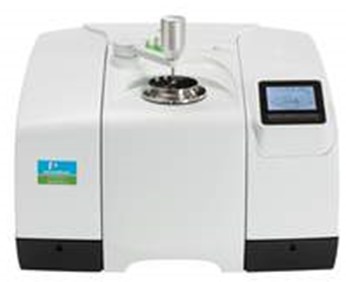
High-Performance Liquid Chromatography (HPLC)
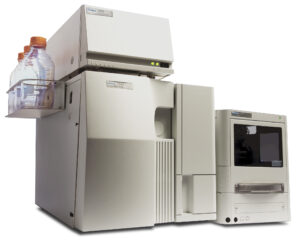
High-Performance Liquid Chromatography (HPLC) is an advanced analytical technique used to separate, identify, and quantify components in a liquid mixture. It is widely used in pharmaceutical, environmental, food, and clinical laboratories for its high resolution, sensitivity, and reproducibility [1].
Key Applications in Pharmaceutical and Nanomaterials Research:
- Determining the purity of drug compounds and active pharmaceutical ingredients (APIs).
- Quantifying drug loading in nanoparticle drug delivery systems.
- Analyzing degradation products and stability of formulations.
- Detecting and quantifying contaminants in environmental and biological samples.
- Quality control for raw materials and finished products.
2. Principle of Operation (Simplified)
A liquid solvent (mobile phase) is pumped at high pressure through a column packed with a solid stationary phase. A small volume of your liquid sample is injected into the mobile phase stream. As the sample travels through the column, its different components interact with the stationary phase to varying degrees. This causes them to elute (exit the column) at different times (retention times). A detector measures the signal of each component as it elutes, producing a chromatogram (a plot of detector signal vs. time) [2].
3. Information You Will Receive in Your Report
- Chromatogram: A plot showing peaks for each separated component in your sample.
- Retention Time (tR): The time each component takes to elute from the column, used for qualitative identification.
- Peak Area (or Height): The area under each peak, which is proportional to the concentration of that component.
- Quantification Results: Concentration of specific analytes calculated from a calibration curve.
- Purity Assessment: The percentage purity of your main compound.
- System Suitability Parameters: Data on column efficiency, resolution, and peak symmetry to validate the analysis.
4. Sample Preparation Guide
Proper sample preparation is critical for accurate and reproducible HPLC results.
- Step 1: Prepare your sample in a suitable mobile phase-compatible solvent (e.g., water, methanol, acetonitrile). The solvent should be of high purity (HPLC grade).
- Step 2: Filter your sample solution through a 0.45 µm or 0.22 µm syringe filter to remove any particulate matter. This protects the column and the instrument.
- Step 3: Transfer at least 1-2 mL of the filtered solution into an HPLC autosampler vial.
- Step 4: Clearly label the vial with your sample name or code.
Important Notes:
- Ensure your sample is completely dissolved and the solution is clear.
- Avoid using non-volatile buffers or salts in high concentrations, as they can precipitate and clog the system.
- If your sample is not soluble in the mobile phase, consult us for alternative method development.
5. Understanding Your Results (Guide to Interpretation)
The chromatogram is the primary result.
- Retention Time (tR): Each component in your sample will produce a peak at a characteristic retention time. By comparing the tR of peaks in your sample to those of pure reference standards, you can identify the components.
- Peak Area: The area under a peak is proportional to the concentration of that component. By running standards of known concentration, you can create a calibration curve and calculate the exact concentration in your unknown sample.
- Peak Shape: Ideal peaks are sharp and symmetrical (Gaussian). Tailing peaks (long tail) or fronting peaks (steep front) can indicate column or sample issues.
- Resolution: The extent of separation between two adjacent peaks. Baseline separation (no overlap) is ideal for accurate quantification.
6. Frequently Asked Questions (FAQ)
- How much sample do you need? At least 1-2 mL of a filtered solution at a suitable concentration (typically 0.1 – 1.0 mg/mL for the main analyte). Contact us for guidance on your specific compound.
- What type of solvent should I use? Use HPLC-grade water, methanol, acetonitrile, or other volatile solvents compatible with the intended method. Avoid using strong acids, bases, or non-volatile salts (e.g., phosphate buffers) without prior consultation.
- Do I need to provide a reference standard? For quantitative analysis, yes. You need to provide a certified reference standard of the analyte you wish to quantify. We can also assist in sourcing standards.
- How long will the analysis take? 48-72 hours from sample receipt, depending on the complexity of the method.
- Can you develop a new method for my sample? Yes, we offer method development as a separate service. Please contact us to discuss your specific needs.
7. References
- [1] Snyder, L. R., Kirkland, J. J., & Dolan, J. W. (2010). Introduction to Modern Liquid Chromatography (3rd ed.). John Wiley & Sons.
- [2] Meyer, V. R. (2010). Practical High-Performance Liquid Chromatography (5th ed.). John Wiley & Sons.
- Internal Source: Phi Nanoscience Center (PNSC) has extensive experience in HPLC method development and validation for pharmaceutical and nanomaterial applications, as demonstrated in our published research (e.g., PNSC internal data and team publications).
8. Request This Test
To request HPLC analysis or any of our other services, please complete the Sample Testing Request Form using the link below. We will contact you within 24 hours.
No reviews yet. Be the first to share your experience.