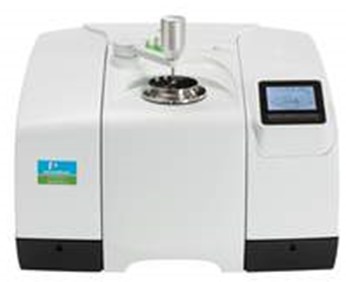
Hot Disk Thermal Properties Analysis
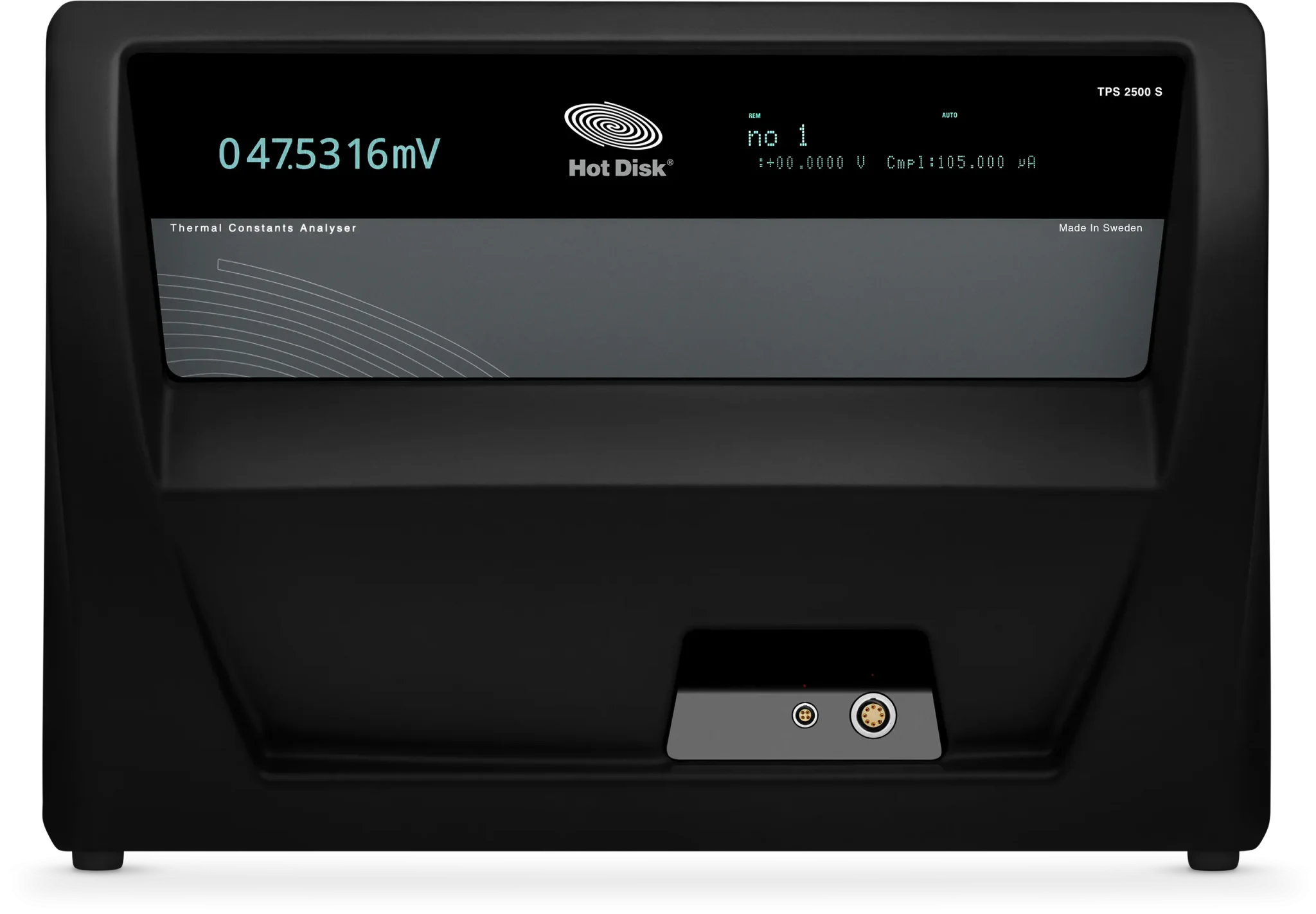
Hot Disk Analysis, based on the Transient Plane Source (TPS) technique, is used to characterize the thermal transport properties of materials. It can determine thermal conductivity, thermal diffusivity, and volumetric specific heat capacity from a transient measurement.
The technique is suitable for a wide range of materials, including solids, polymers, ceramics, composites, insulation materials, powders, pastes, and selected liquids. The available measurement range depends on the sensor, sample dimensions, material type, temperature, and installed analysis module. The TPS method is covered by international standards including ISO 22007-2. [1,2]
1. Key Applications in Materials Science and Engineering
- Measuring the thermal conductivity of materials.
- Comparing the heat-transfer performance of different formulations.
- Evaluating thermal insulation materials.
- Characterizing polymers, ceramics, composites, and nanocomposites.
- Studying the effect of fillers, porosity, density, and processing conditions.
- Assessing materials used in electronics, batteries, construction, and thermal management.
- Investigating anisotropic materials when the appropriate measurement module is available.
- Supporting research, product development, and quality-control studies.
2. Principle of Operation — Simplified
A thin Hot Disk sensor is normally positioned between two similar pieces of the sample. The sensor functions simultaneously as a heat source and a temperature-sensitive resistance element.
During the test, a controlled electrical pulse passes through the sensor and produces a small increase in temperature. The generated heat spreads from the sensor into the surrounding sample.
The instrument records the sensor’s temperature response over time. Specialized software then analyzes the transient temperature curve to calculate the material’s thermal transport properties.
Because the sensor is placed directly between the sample pieces, the standard configuration requires good contact between the sensor and both sample surfaces. [1]
3. Information Included in Your Report
Depending on the selected measurement method and sample suitability, the report may include:
- Thermal Conductivity, k (W/m·K): Indicates how effectively the material transfers heat.
- Thermal Diffusivity, α (mm²/s): Indicates how rapidly a temperature change spreads through the material.
- Volumetric Heat Capacity (MJ/m³·K): Represents the amount of thermal energy required to increase the temperature of a unit volume of material.
- Measurement Temperature: The sample temperature during analysis.
- Sensor Type and Radius: Details of the Hot Disk sensor selected for the sample.
- Heating Power and Measurement Time: Experimental parameters required for reproducibility.
- Repeat Measurements: Individual results, average values, and variation when applicable.
- Thermal Response Curve: The recorded transient response used in the analysis.
- Technical Assessment: A brief interpretation of the results and their consistency.
4. Sample Preparation Guide
Proper sample geometry and surface contact are essential for reliable results.
For solid samples
- Prepare two similar pieces from the same material.
- Both surfaces contacting the sensor should be as flat, smooth, clean, and parallel as reasonably possible.
- The sample pieces should completely cover the selected sensor and extend beyond its active area.
- Avoid cracks, deep scratches, curved surfaces, loose debris, and surface contamination.
- Do not apply oil, grease, adhesive, or thermal paste unless specifically requested by the laboratory.
- Keep porous or moisture-sensitive samples in sealed packaging until submission.
- Record the sample composition, density, preparation method, and preferred measurement temperature.
Typical minimum dimensions may be approximately:
- 13 mm diameter or width × 3 mm thickness, or
- 8 mm diameter or width × 2 mm thickness for certain specialized configurations.
These dimensions are only preliminary guidance. The required size depends on the material’s expected thermal conductivity and the available sensor.
For powders, pastes, or liquids
- Submit the material in a clean, tightly sealed, and clearly labelled container.
- Provide enough material to fill the appropriate sample holder without large air gaps.
- Do not dilute or add a dispersing agent unless this is part of the intended formulation.
- Inform the laboratory if the material is volatile, moisture-sensitive, reactive, corrosive, or hazardous.
- For powders, provide the bulk density or packing procedure when available.
5. Understanding Your Results
Thermal conductivity
Thermal conductivity describes the ability of a material to conduct heat.
- A lower value generally indicates better thermal insulation.
- A higher value generally indicates more efficient heat transfer.
Whether a value is considered high or low depends on the material category, density, porosity, temperature, moisture content, orientation, and intended application.
Thermal diffusivity
Thermal diffusivity indicates how rapidly a material responds to changes in temperature.
- Materials with higher diffusivity generally distribute temperature changes more rapidly.
- Materials with lower diffusivity generally respond more slowly and may retain localized temperature differences for longer periods.
Volumetric heat capacity
Volumetric heat capacity indicates how much heat a specific volume of material can store for each degree of temperature change.
A higher value means that more energy is required to change the material’s temperature. This property is particularly important in thermal-energy storage, construction materials, batteries, and thermal-management applications.
Result consistency
Repeated measurements should normally produce closely comparable results under identical conditions. Large variations may indicate:
- Poor contact between the sample and sensor.
- Uneven, damaged, or nonparallel surfaces.
- Sample heterogeneity or anisotropy.
- Variations in density, porosity, or moisture.
- Incorrect sensor size or measurement settings.
- Insufficient thermal equilibrium before testing.
6. Frequently Asked Questions
What samples can be tested?
The technique can be applied to many solids, polymers, ceramics, composites, insulation materials, powders, pastes, and selected liquids. Final suitability depends on the sample condition and available measurement configuration.
Do you need two pieces of the sample?
The standard TPS configuration normally requires two similar sample pieces with the sensor positioned between them. Single-sided testing may be possible only when the appropriate module and configuration are available.
What sample dimensions are required?
The required dimensions depend on the sensor and the expected thermal properties. As preliminary guidance, samples may start from approximately 13 mm × 3 mm, while smaller configurations may accept approximately 8 mm × 2 mm. Please confirm the dimensions before preparing the sample.
Does the surface need to be polished?
Mirror polishing is not always necessary. However, the contacting surfaces should be flat, clean, and sufficiently smooth to provide uniform contact with the sensor.
Is the test destructive?
The TPS measurement is generally considered non-destructive because it uses controlled transient heating. The sample should remain physically unchanged under suitable measurement conditions.
Can anisotropic materials be tested?
Yes, directional thermal properties may be evaluated when the appropriate geometry and analysis module are available. The expected heat-flow direction must be stated before testing.
Can coatings or thin films be measured?
Thin films, coatings, and adhesive layers require specialized configurations. Please provide the approximate thickness, substrate type, and expected thermal conductivity before submitting the sample.
Why might the measured value differ from published data?
Thermal properties are affected by composition, density, porosity, moisture, temperature, filler concentration, processing history, sample orientation, and surface contact.
How long does the analysis take?
Results are typically issued within 24–48 hours after sample receipt, depending on the number of samples, required repeats, and measurement conditions.
7. Information Required Before Testing
Please provide:
- Sample name and composition.
- Sample type: solid, powder, paste, or liquid.
- Exact dimensions and available quantity.
- Expected thermal-conductivity range, if known.
- Sample density and porosity, if available.
- Preferred measurement temperature.
- Material orientation, particularly for anisotropic samples.
- Any relevant safety or handling information.
- Number of required measurements or replicates.
8. Request This Test
To request Hot Disk Thermal Conductivity Analysis or any of our other characterization services, please complete the Sample Testing Request Form using the link below.
Our technical team will review your sample information and contact you to confirm the appropriate dimensions, measurement conditions, cost, and expected completion time.